Showing posts with label state park. Show all posts

Appalachian Adventures (Final Chapter): Tu-Endie-Wei, Zoar, and Beer along the Muskingum

Our visit to Point Pleasant, WV, showed us to our pleasing surprise that this little river town has a bit more to offer outside of the Mothman mythos. One was already written about in regard to the U.S. Navy Poster Museum; this final post on our trip talks about the history behind Tu-Endie-Wei State Park.

Ohio itself has plenty of history to go around; while our earlier visit to The Serpent Mound detailed this state's original inhabitants, our visit to the Zoar Historical Village detailed one of one of the more unique groups of European settlers to set up their home within this state's borders.

In between these two visits, we dropped into Marietta, the first permanent settlement northwest of the Ohio River, to check out where the locals drop by for some locally brewed beer and pub grub.

From the Wyandot word for "point between two waters", Tu-Endie-Wei
State Park in West Virginia turned out to be much more than a pretty view
Tu-Endie-Wei State Park:  The point of land that holds this state park would be a in-the-area destination if only for the pretty view, combining multiple river bridges as well as the confluence of the Kanawha and Ohio Rivers. But the impossible to miss monument centered on this property gives the visitor the hint that there's something much more to this piece of land other than pretty views and nicely manicured greenery.

Although unintended, our visit to the park came on a rather momentous day: roughly 240 years prior, what some historians have dubbed the first battle of the American Revolution took place upon this Point Pleasant site on October 10, 1774. At that time, clashes with Indians were commonplace, and seen by American forces as possibly detrimental in a possible conflict with mother country Britain, especially if Britain were to ally with the natives.

After signing a peace treaty with Iroquois Nation and Delaware tribes, Governor of Virginia Lord Dunmore meant to quell rebellious Shawnee and Mingo tribe factions to the south, led by Chief Cornstalk, by teaming up with appointed commander of Virginia's militia, Andrew Lewis. Suffice it to say, the battle was brutal (300 deaths spread between both forces) but successful for the colonists, as it led to a treaty where Shawnee and Mingo forces would remain neutral in any American-British encounter.

Numerous monuments related to the signature battle which occurred
on park land, the Battle of Point Pleasant, are scattered around the park.
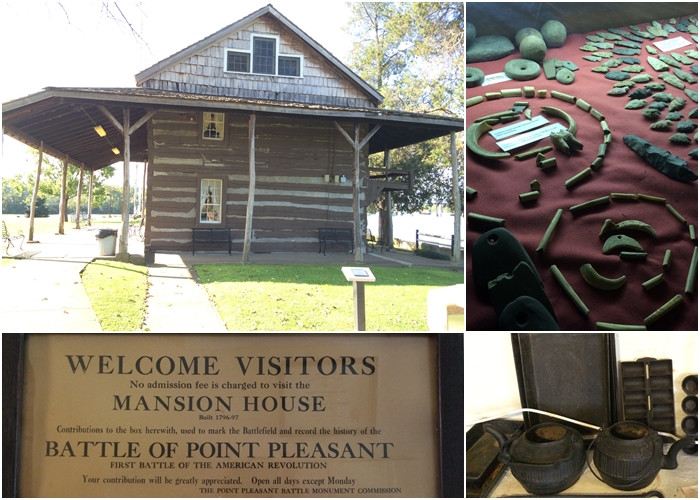
Also located at the park is Mansion House, the oldest hewn log house in the area (and originally run as a tavern) that has been preserved and turned into a museum run by the local chapter of the Daughters of the American Revolution. Open from May to October, it does not look like much from the outside and actually looks on the smallish side, but the visitor will find more artifacts, bits of local history and other items of interest stuffed within this building's multi-leveled interior than one might think.

On a side note, if you do get the chance to walk along the river on the Point Pleasant side, be sure floodwall murals (similar murals reside in other towns further down river such as Portsmouth, OH and Covington, KY), which provide a artistic rendition of life along the river as well as important historical events in the area, including those which took place at Tu-Endie-Wie.


Tu-Endie-Wie State Park
1 Main Street
Point Pleasant, WV 25550
Facebook     Website


The Zoar Store, where most people's tour of this historic
Ohio village just north of Dover starts

Zoar Historic Village: Located just northeast of Dover and New Philadelphia, Ohio, the historic settlement of Zoar provides an incredibly detailed look at a unique group of settlers who made their communal way of living work for over over 80 years.

Formed by a group of 200 separatists escaping religious persecution in their home country of Germany, Zoar Village was founded in 1817 with a communal arrangement. In something of a Cliff Notes version of basic operations, Zoar society members were assigned tasks to keep the village functioning, and all goods produced were shared equally among all in the village. All needed goods and wares were produced among community members, and with the generally rough living conditions and the need to conserve limited resources, a philosophy or reusing goods and building things to last was commonplace among members of the village.

We had previously visited a similar town/state park in the Gold Country of California in the historic town of Columbia, and there are definitely some similarities to these two places. However, we found that Zoar had a more down-to-earth quality to it, and the exhibits that were opened (coming during off-peak tourist season and a Sunday meant that some exhibits were closed) gave us a more detailed look at what the hardship the original settlers must've felt versus the cleaned-up view of mining life that Columbia presented.

After checking in at the Zoar Store/Visitors Center (here you can purchase souvenirs as well pay admission for a wristband that will let you into all the open exhibits), we walked two blocks to the Town Hall, one of the last buildings built by the society and currently home for two museums. After a helpful video introduction to the Zoar society, we wandered through this two story building and saw a rather extensive collection of tools and personal artifacts gathered from the original Zoar settlers.


The well-preserved nature of many of these items is a tribute to the Separatists' mantra of taking care of their belongings and creating them to last. This building also holds items for the Ohio & Erie Canal Museum: Zoar and Bolivar were on the southern stretches of this transportation pathway from the Lake Erie region, proving especially vital for the first couple or three decades for Zoar settlers (the canal's importance declined starting in the 1850s when the railroad became the dominant mode of transport of goods and people throughout the country.)

Next, we ventured to the Number One house (residential houses were originally numbered to help make the distribution of goods an easier process) where society founder Joseph Bimeler and Zoar trustees once resided. Within this solidly built house (this can be visually seen quite well when touring the basement) visitors can get not only an idea about the functional quarters the settlers lived with, but also the laundry areas as well as the magazine, where goods were stored and available to distribution to all village residents. One also can further sample the great craftsmanship within various collective members, with perhaps the most striking being in the organ handcrafted by Peter Bimeler, great grandson of Joseph and the miller for Zoar during its later years of existence.


Other exhibits, original Zoar houses turned into private residences (while they are not open to the public, visitors are free to walk through the streets and view these 19th-century era homes) and businesses (including a tavern and a bed and breakfast) are scattered throughout the village. However, the undeniable centerpiece of the village remains the Zoar Garden. Anchored in the center by a large spruce tree (meant to symbolize everlasting life), the garden acted then as both a spiritual haven (the numerous paths emerging from the center are representative of paths to Heaven) and a source of sustenance to village members (the grounds then and still grow vegetables and fruits.)  On this sunlit day, we couldn't help wander through this area and feel at peace with life in general, free to ponder what the original settlers were thinking dozens of years ago as they did the same.


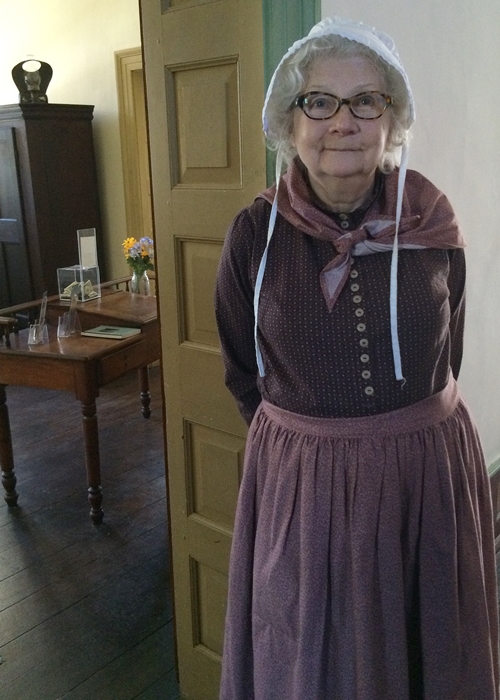
While the original Zoar collective officially disbanded in 1898, the pride in what those original members were able to accomplish in their nearly 70 years of existence remains strong today with their descendants. We felt fortunate to experience that while chatting with one of the village's current docents, who had set up shop inside Number One House to guide that day's visitors. We learned that she was descended from the Bimelers of Zoar, and her obvious excitement in being able to relate her family's history to visitors like us in the actual living quarters of her ancestors was palpable and heartwarming. This conversation, above all, may have been the most satisfying moment of our exploration of this unique bit of Ohio history.

Zoar Historical Village
198 Main St
Zoar, Ohio 44697
(330) 874-3011 or (800) 262-6195
Facebook     Twitter     Website


Marietta Brewing offers a solid brew and grub option
for this river town's resident in the heart of downtown
Marietta Brewing Company - The town of Marietta, sporting 14,000 people at the last Census count and holding the distinction of the first American settlement northwest of the Ohio River, can be a bit confusing for first-time travelers coming north on Ohio State Route 7. After having West Virginia on the other side of the river for pretty much the entire route, I found myself a bit confused having to cross a bridge to get into Marietta, as I thought that we must surely be going into Ohio's neighboring state. Later, I was able to figure out that we were actually crossing the Muskingum River, and that Marietta was firmly ensconced in Buckeye country.

The building in which Marietta Brewing Company (MBC) resides may, for those familiar with the Columbus brewery scene, remind them of the building where Barley's Brewing Company resides. Its downtown location, high ceilings and brick-lined interior are obvious points of reference; the large murals inside MBC are also reminiscent of the posters which line Barley's walls. This brewery, which is the second incarnation of the concept (the first iteration of the brewing company was in 1866 on a site a couple blocks from the current establishment), was like Barley's similarly founded in the 1990s, some five years after Barley's was established in 1992.


Food-wise, MBC treads similar pub grub ground as places like Barley's or Mad Anthony Brewing in Fort Wayne, with a slightly more limited selection but with a pizza option. Obviously, this is a first impression based on just one meal (for my spouse, the steak salad and for me, a veggie pizza) but I'd put the food level somewhere ahead of Mad Anthony's and just slightly behind places like Barley's or even Smokehouse Brewing in Columbus, but more or less in that same class of brewpub grub that's perfectly pleasing with a brew or two.


Marietta also hones its focus in terms of its own brews, rotating its own seasonal around a base of five year-round beers. While the selection may be smaller than most, the beers we had were all at least better-than-average.The standout brew for us was their Esther's Raspberry Wheat, which compares quite favorably to the Razz Wheat that Jackie O's in Athens, Ohio produces. Another solid brew was their Stanleyville Milk Stout, a smooth and creamy rendition with a pleasant maltiness and coffee notes. If MBC's own in-house brews don't appeal to you, a wide variety of mainly bottled craft brews from all parts of Ohio (on our visit, at least two choices from the Cincinnati, Cleveland and Columbus areas were available) from all parts of Ohio and outside the state are available for your drinking pleasure.

Marietta Brewing Company
167 Front St.
Marietta, OH 45750
(740) 373-2739
Facebook     Instagram     Twitter      Website

Marietta Brewing Co. Menu, Reviews, Photos, Location and Info - Zomato

Sonoma Day-Tripping: Fremont Diner/Mission Sonoma San Francisco/Adobe Road Winery

Our California travels during the holidays, unlike other visits in the past, were marked by days or half-day trips instead of extended multi-day affairs. One of these excursions was marked with a quick road trip along Highway 12 into Sonoma, where we dropped by an old favorite, absorbed a little California history, and did a little wine tasting along the way.

The Fremont Diner has gained a loyal following since its opening in 2009
Fremont Diner - this roadside diner had been formerly the home of a long-standing roadside dive Babe's Burgers and Franks, which had a reputation for good burgers. After Babe's closed, over a year passed before the building was remade and reopened in mid-2009 by owner Chad Harris. Despite the cramped (though nicely nostalgically-decorated) interior space and window-only service, diners started to flock here as word spread the delicious Southern-styled eats being created here using locally sourced food purveyors.

I myself had been a frequent visitor of the diner while I was still residing in the Bay Area, and my spouse got the pleasure of tasting their wares on our first year dating anniversary trip out to California in 2011. Our last year's Christmas-time trip to California was our first chance for a revisit since then.

Exterior changes were the first thing that caught my eye on this return back to the diner. The hand-painted clumsy-in-a-charming way original Fremont Diner sign had been relegated to the back of the property. Even when this sign was up front, the restaurant was (and still is) easy to drive past if you aren't sure what to look for.

Clockwise from top left: Glass jugs of complimentary water; a "Greetings
 from Sonoma" mural from the now-enclosed outdoor seating area; a shot
of the Fremont Diner kitchen; and dishes of deliciousness ready to go
In addition, the outdoor grassy area with picnic tables next to the restaurant with had been enclosed, providing a shelter from inclement weather or extreme temperatures. With indoor seating packed as usual and cold temperatures (by California standards) that morning, it was a welcome sight this morning. This enclosed space had some additional neat features, including a natty Sonoma-oriented mural and play things for the kids (I spied two buckets of Mr. Potato-Head toys, amongst other items.)

Another welcome change was the switch to table service, which is a fairly recent change from the order at the window queue I was used to going through every time I dropped by for a visit. Being a bit chilly in the outdoor seating, we immediately ordered a pot of French Press coffee; the diner uses the roasts of San Francisco-based Four Barrel Coffee.

Clockwise from top left: Four Barrel French Press Coffee; Nashville Fried
Chicken and Mac 'N Cheese (from an earlier visit); and our breakfast this
morning: Black Pepper Brisket Hash and the Chilaquiles
While there are many delicious things to sample here at Fremont, my personal leanings are toward their Nashville-style chicken (yes, take note all you Hot Chicken Takeover fans who might be heading to the Bay Area soon) and anything involving pork. No chance for fried chicken this early in the morning (we did find an archival photo of their finger-licking version of this dish from a previous visit, as seen above), but we found some acceptably delectable substitutes in the Black Pepper Brisket Hash ($10.99) and their take on Chilaquiles ($11.99). The spouse was taken aback at first at not getting a corned beef flavor profile, but got in tune with the smoky profile of the brisket in her hash. The addition of pickled onions in my chilaquiles add both a bit of color and extra zing to Fremont Diner's otherwise solid take on this Mexican classic.

The Fremont Diner has a whole lot more to choose from, including craft ciders and beers, desserts (including butterscotch pudding and lemon chess meringue pie slices) and the recent addition of barbecue dinners spring of 2014. Perhaps the best advice if you decide to stop by is bring an appetite and/or bring a lot of friends: there's a lot of good stuff to be found in Fremont Diner's seasonally-oriented menus, and there is no real mystery why this place remains a favorite destination for many.

The Fremont Diner
2698 Fremont Dr. (CA Highway 12 - Google Maps)
Sonoma, CA  95476
(707) 938-7370
Facebook     Instagram     Twitter     Website


The front of  Mission San Francisco Solano, the most
northernmost mission on the famed El Camino Real
Mission San Francisco Solano - there is no doubting the influence that Spanish settlers had in many areas throughout the Americas, and California was an area where that influence was profound. Much of this influence was brought on by those of the Catholic faith: from the mid-1700s all the way to statehood in 1859, representatives from the Franciscan Order, led by Father Junipero Serra, setup missions throughout the state with the idea to colonize the area as well as bring Christianity to the native peoples.

This Spanish colonization had consequences both positive (mainly via introduction into California of modern agricultural technology and European vegetables, fruits and horses) and negative (particularly in relation to the decline and decimation of Native populations from exposure to diseases and the attempts to turn and keep individuals into Christianity.) An inexpensive way to dive into this chapter of California history lies in a visit to one of these sites.

The main mission building, restored after the 1906 San Francisco
Earthquake damaged the structure, contains many informational exhibits,
Mission San Francisco Solano in Sonoma, operated by California State Parks and part of the Sonoma State Historic Park, is the northernmost and last established (construction began in 1823) outpost along what became known as El Camino Real (translation: The Royal Highway). This road connected the 21 missions of what was then Alta California as well as assorted military presidios and pueblas such that a traveler could make it between outposts with one day's travel.

The only mission established while an independent Mexico ruled the region, Mission Solano San Francisco operated as such for only 11 years before it was officially closed in 1834. From there, the building underwent numerous ownership transfers and uses as well as increasing neglect until the property was bought by the California Landmarks League in 1903. Restoration efforts began several years after this purchase before the full transfer of the property to the state of California took place in 1926.

Various scenes from around the Mission, including the chapel and
the fenced-in courtyard behind the main building.
Admission to the Mission property will get you into several sites which now make up the Sonoma Historic Sites Park, including the Military Barracks and nearby Casa Grande Servants Quarters, the Toscano Hotel, and two homes associated with General Mariano Guadalupe Vallejo, who was influential in the military, business and political realm in the years just before, during after the Mexican-American War as well as the subsequent statehood of California.

Exhibits inside the Sonoma Barracks, including a original
California Bear Republic flag. We also dropped by the Toscano
Hotel and the Casa Grande Servants Quarters.
The Mission and associated Sonoma Historic Sites Park is open 365 days a year except on Thanksgiving, Christmas and New Year's Day.

Sonoma State Historic Park
363 Third Street West
Sonoma, CA 95476
(707) 938-9560
Facebook     Twitter     Website


The interior of Adobe Road Winery, including their delicious wines.

Adobe Road Winery - I have a confession here to divulge: for all the years of residing next door to the most famous of the Bay Area's wine countries, I really was not much into wine tasting or drinking. My spouse and I have visited wineries since we've been together, but they never have been approached as enthusiastically as our pursuit of breweries.

Not that this visit to Adobe Road, located in the heart of Downtown Sonoma will change this tendency, but this was perhaps my first wine tasting where there was not a blah wine in the bunch. This was also a wine tasting that will guarantee a return visit at some point.for us.

This winery tasting room (the main winery is located in Petaluma), located on the main plaza in downtown Sonoma, is part of the boutique wine hobby/business of Kevin and Debra Buckler. Their prime business lies in auto racing, started in 1992 with the founding of their The Racing Group (TRG) race team (they now race under the banner of TRG-Aston Martin.) The Bucklers' have been quite successful at this prime venture, concentrating mainly on the Gran Turismo (GT) racing circuit with a brief dalliance with the NASCAR circuit in the late 2000s.

Their winery, started a few years after the founding of the racing team, has both received the same level of passion from the Bucklers and seen its own measure of success with highly-rated wines and various awards. On this visit, we had only been intending to grab a bottle of their old vine Zinfandel for my father-in-law, who had been wowed by it on a previous visit to the area. But as we got closer, we began to start thinking to ourselves, "Well, we're here...why not taste what they have?

Adobe Road Winery offers a standard tasting on weekdays of $15 and a tasting of their reserve wines on weekends for $25; both those fees are waived if you decide to purchase some wine. Our visit this day came with two bonuses, the first in the form of our host. Alec was a wonderful host, engaging in both his humor as well as his knowledge of the winery and the wines we were sampling. Our second bonus came in the day we visited: since we came on a Monday, we found out that the there were leftover wines from the premium tasting from the weekend. Since the wines would simply be tossed out due to oxidation, we were able to sample their entire available collection.

At the end of our wine tasting, my spouse and I agreed we could have been happy purchasing ANY of the bottles of wine they had for sale. Our fortune to sample the premium wines worked out for both us and Adobe Road, as we walked out with a bottle of their delicious Cabernet Franc along with the requested old vine Zinfandel for my father-in-law. This Cab Franc will definitely be a wine we save for a very special occasion.

Adobe Road Winery (Tasting Room)
481 1st Street West
Sonoma, CA 95476
(707) 939-9099
Facebook     Twitter     Website